





Introduction: Getting around Lucerne — a first-timer’s primer
Lucerne (Luzern in German) is often the first stop for travelers arriving in central Switzerland. Nestled on the shore of Lake Lucerne and framed by peaks like Pilatus and Rigi, the city combines a compact pedestrian Old Town with a highly efficient public transport network. For a first-time visitor, knowing how to move between the main station, the lake piers and neighborhood buses is essential to make the most of your stay without wasting time or money.
This practical guide explains, clearly and in detail, how to use trains, boats and buses in Lucerne. It includes exact addresses (so you can find stations and offices), typical operating hours, indicative prices shown in euros (approximate conversions from Swiss francs), and local tips to avoid common mistakes. The goal is simple: so that upon arrival in Lucerne you can buy the right ticket and pick the best transport option—whether that’s a short bus hop, a boat trip across the lake, or a train departure to the Alps.
Lucerne is served by several operators: the Swiss Federal Railways (SBB/CFF/FFS), the regional Zentralbahn (for Interlaken and Engelberg), the Lake Lucerne Navigation Company (Schifffahrtsgesellschaft des Vierwaldstättersees — SGV) for lake boat services, and Verkehrsbetriebe Luzern (VBL) for city buses. Each has its own sales points and timetables; however, connections are designed to be seamless: the main station (Luzern Bahnhof / Bahnhofplatz, 6003 Luzern) sits literally next to the piers and bus stops, making transfers easy.
Before diving into lines, fares and addresses, a quick reminder: Switzerland uses the Swiss franc (CHF) for purchases and ticket machines. In this guide all prices are shown in euros (€) as a guideline — we provide approximate conversions to help your planning. Exact prices and timetables can vary by season (boats, for example, run more often in summer). I recommend checking official sites SBB, SGV and VBL or using their mobile apps (SBB Mobile, www.sbb.ch; SGV, www.lakelucerne.ch; VBL, www.vbl.ch) before you travel for any last-minute updates.
Inside you’ll find immersive descriptions of departure points, practical tips for buying tickets (counters, machines, apps), typical schedules to plan your day, approximate costs in euros and local hacks (for instance, where to board a short cruise, which platform to pick at the station, or how to spot night buses). With this information you should be able to get around Lucerne confidently—whether you’re heading to your hotel, crossing the lake for a hike, or catching a train for a day trip into the mountains.
1) Lucerne main station: the central hub for trains and connections
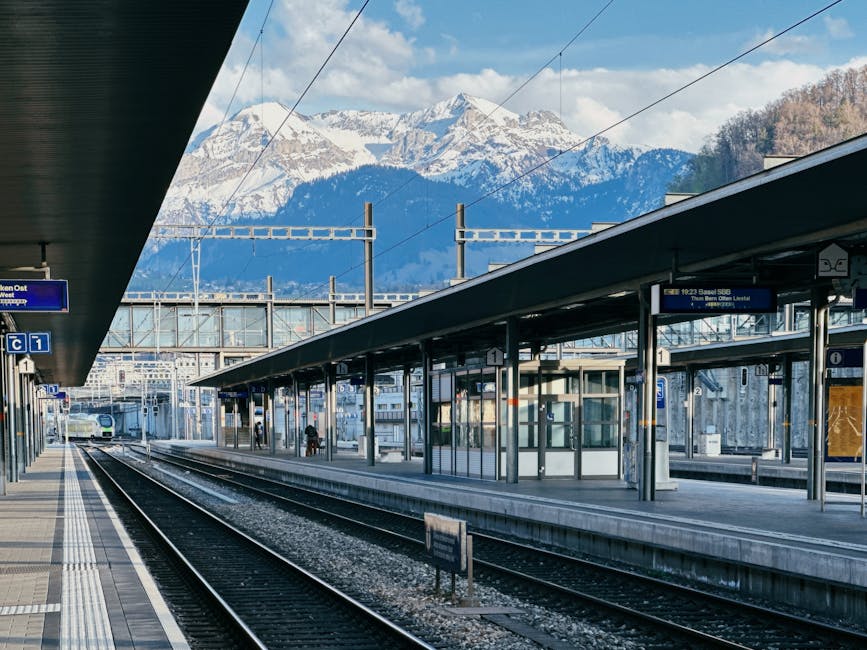
Lucerne station (Luzern Bahnhof) is the nerve center for travelers. Exact address: Luzern Bahnhof / Bahnhofplatz, 6003 Luzern, Switzerland. It brings together platforms for SBB/CFF/FFS and Zentralbahn, the river and lake piers at Bahnhofquai, and numerous urban and regional bus stops. Visually, the modern façade and large arrivals hall are easy to spot and make a good meeting point to find your travel companions.
Hours and frequency: regional (S-Bahn) and national trains generally run between 04:30 and 01:00, with high frequency during the day (often every 15–30 minutes for regional services). Long-distance trains (InterCity, EuroCity) follow variable schedules; for example, the InterCity between Zürich Hauptbahnhof and Luzern departs roughly every 30 minutes. SBB ticket counters are usually open from 06:00 to 20:00; ticket machines are available 24/7.
Tickets and indicative prices (in euros): a short local trip within the urban zone by train/bus typically costs between €2.5 and €3.5. A regional trip Luzern → Engelberg (Zentralbahn) is about €12–€18 depending on time; Luzern → Interlaken Ost is roughly €28–€38. These figures are approximate conversions from Swiss francs (1 CHF ≈ 1.0–1.1 € depending on the rate). Machines accept bank cards and cash (CHF).
Practical tips:
- Getting your bearings: Exit via the “Bahnhofplatz” exit to step straight onto the boat piers (Bahnhofquai) and the VBL city bus network.
- Luggage: Automated lockers (schließfächer) are inside the station and operate 24/7 (indicative price: €5–€9 depending on size and duration).
- Combined tickets: SBB counters sell combined train + boat tickets when offers are available; ask for a “Luzern Region” ticket for lake excursions.
- Off-peak hours: If you travel very early or late, check the last departures; mountain connections (for example to Pilatus) have specific timetables and often start later in the morning.
2) Getting around Lucerne by bus: city network and nearby connections
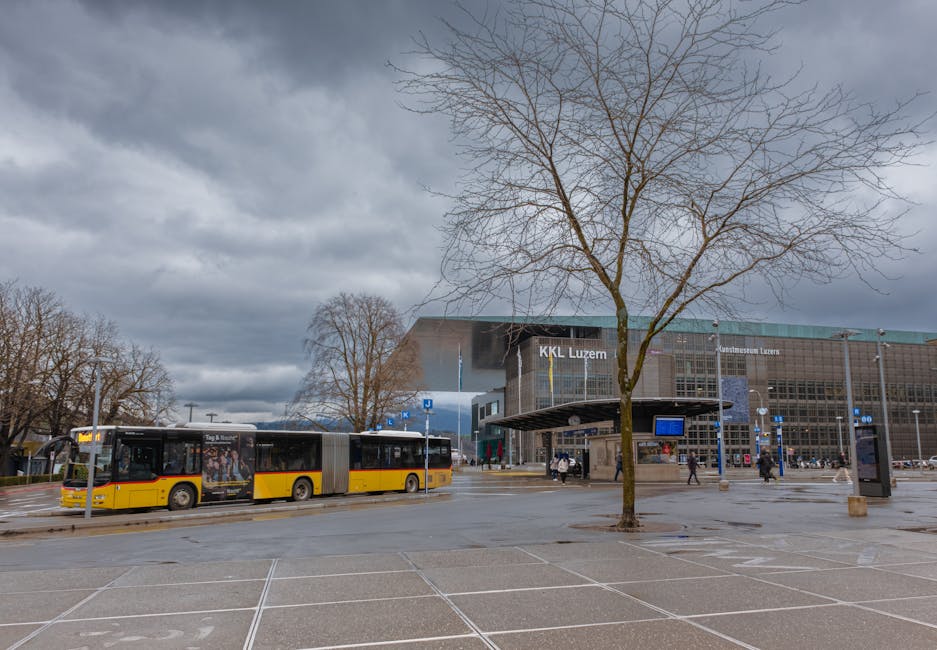
The urban bus network is mainly run by Verkehrsbetriebe Luzern (VBL). Useful address: Verkehrsbetriebe Luzern (VBL), Zentralstrasse 5, 6003 Luzern, Switzerland. The city lines cover the Old Town, outlying neighborhoods (Horw, Littau), and some tourist areas that are less walkable. Main stops are close to the station (Bahnhofplatz) and clearly signed.
Hours and frequency: buses generally operate from 05:30 to 00:30, with main routes (for example lines 1, 2, 6) every 10–20 minutes during the day. Some night lines (Nachtbus) run on Friday and Saturday nights to connect neighboring communities. Exact timetables are posted at stops and on the VBL app (www.vbl.ch).
Fares in euros (indicative):
- Single ticket for the urban zone: €3.00 approx.
- 24-hour ticket (City Pass): €8–€12 depending on covered zones.
- Weekly or monthly passes: very cost-effective if you stay longer — prices vary, ask at the VBL counter.
Buying tickets: you can buy tickets at the SBB/VBL machines in the station, via the SBB Mobile app, or directly from the driver (cash payment is often possible but exact change is recommended). Validate on board for pre-purchased paper tickets. Tickets bought on the app must be activated (validated) before boarding.
Local tips:
- Avoid peak hours: Buses are very busy between 07:00–09:00 and 16:30–18:30; if possible, plan visits outside these windows.
- Check the platform number: At the station several stops are side-by-side (Bahnhofplatz North/South). Read the electronic display for the correct platform.
- Accessibility: Buses are usually stroller- and wheelchair-friendly; let the driver know if you need assistance.
- Combined fares: For mixed trips (bus + boat), ask about regional passes “Luzern Boat + Rail” available at the station or SGV ticket offices.
3) Boats on Lake Lucerne: schedules, boarding and short cruises
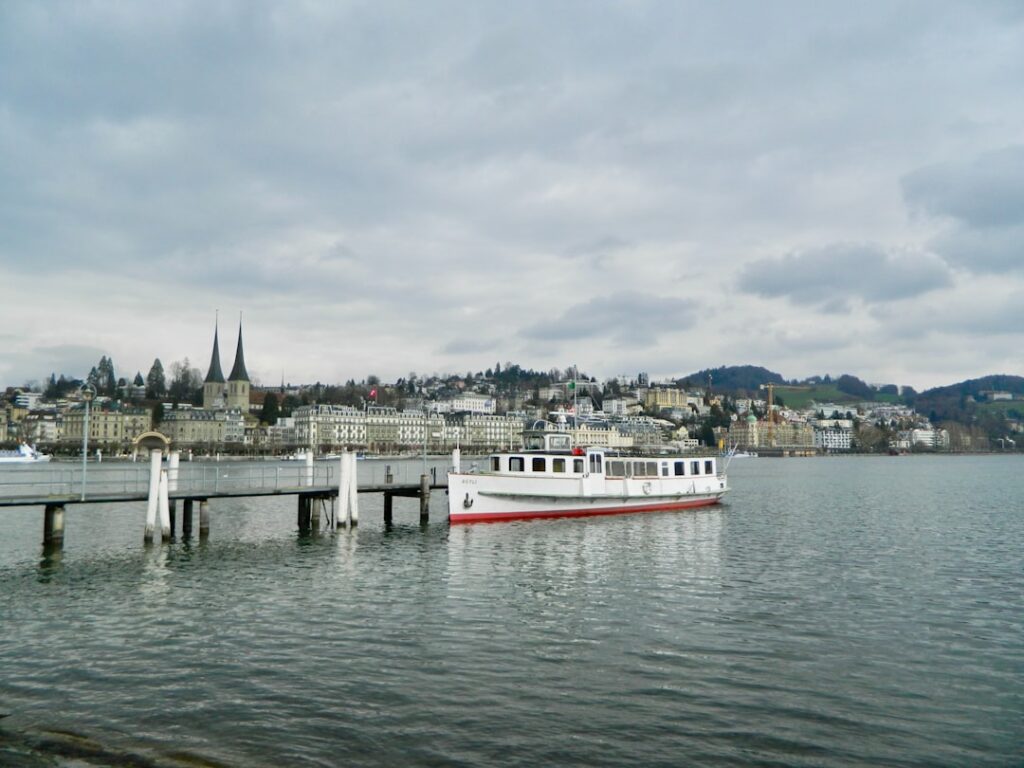
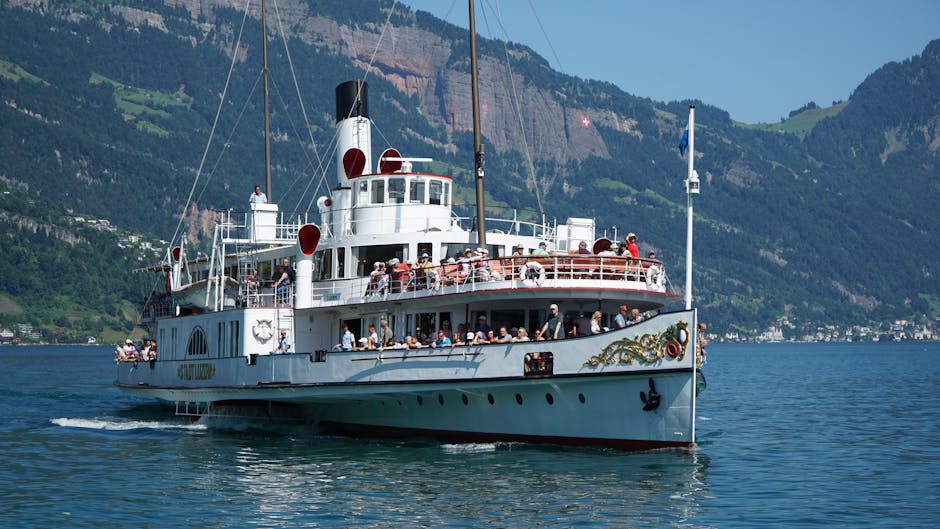
Boats on Lake Lucerne (Vierwaldstättersee / Lake Lucerne) are operated by the Schifffahrtsgesellschaft des Vierwaldstättersees (SGV). The main boarding point is Bahnhofquai: Bahnhofquai, 6003 Luzern, Switzerland. The piers are directly accessible from the station exit. Visually, you’ll spot white-hulled boats with red or gold funnels depending on the season.
Hours and seasonality: in high season (generally April to October) boats run from around 09:00 to 18:00 and even until 20:00 on some routes. Regular services depart roughly every 30–60 minutes for popular destinations (Vitznau, Weggis, Gersau, Flüelen). In low season frequency drops — check timetables on www.lakelucerne.ch.
Indicative prices in euros:
- Short cruise (Luzern → Weggis one way): €8–€12.
- Half-day excursion (Luzern → Flüelen): €18–€30 depending on class and whether you choose a historic steamship.
- Unlimited day boat pass (regional pass): €25–€45 depending on the option and if combined with rail travel.
Immersive descriptions and tips:
Boarding at Bahnhofquai immediately offers panoramic views of the Chapel Bridge (Kapellbrücke) and the colourful façades of the city. Historic steamers, with wooden decks and visible steam machinery, give a nostalgic feel. Bring a windproof jacket even in summer: the lake breeze is cool and weather changes fast between mountains and water. Piers are numbered and displays show upcoming departures; arrive 10–15 minutes early if you want a front seat or a spot on the upper deck.
Tips:
- Combined ticket: If you plan to go up Pilatus or Rigi, buy a combined train+boat+cogwheel or cableway ticket at the SGV or SBB ticket offices.
- Photo spots: The best angle for pictures of the wooden bridge and the Lion Monument is from the quay opposite the boat boarding area.
- Food on board: Boats often have a small bistro; for longer trips, bring water and snacks if you have specific dietary needs.
4) Taking the train from Lucerne: regional links and alpine day trips
Lucerne is an ideal base for train excursions to the mountains and other Swiss cities. The main rail services serving Lucerne are: SBB/CFF/FFS (Swiss Federal Railways) for national routes and Zentralbahn for mountain lines (Luzern — Engelberg, Luzern — Interlaken via Brünig). Zentralbahn regional ticket office: Zentralbahn AG, Bahnhofplatz, 6003 Luzern, Switzerland.
Hours and frequency: S-Bahn regional trains (S1, S3…) depart frequently (every 30 minutes or better) during the day. Mountain routes may require connections — for example, Luzern → Engelberg (Zentralbahn) is direct and takes about 45 minutes; Luzern → Interlaken Ost via the Brünig line is scenic and takes roughly 2 to 2.5 hours depending on the service.
Indicative prices in euros:
- Luzern → Engelberg: €12–€18.
- Luzern → Interlaken Ost: €28–€38.
- Luzern → Zürich HB (1st class): €20–€35 depending on time and train type.
- Swiss Travel Pass (indicative): 3 days ≈ €200–€260, 4 days ≈ €250–€320 — the pass covers most trains, buses and boats and can save money if you plan lots of travel.
Tips for excursions:
- Book ahead: For panoramic trains or busy routes (summer weekends), buy your ticket the day before or reserve a seat if the service allows it.
- Pick the right class: 2nd class is comfortable and fine for most travellers. 1st class offers more space and sometimes a quieter environment for working or relaxing.
- Luggage: Some Swiss trains allow bikes on certain routes (extra fee, reservation recommended in high season); check ahead if you travel with a bike or bulky gear.
5) Local tips, safety and saving money: make the most of travel in Lucerne
A few local tips go a long way for a smooth stay. First, consider regional passes: if you plan several bus+boat+train trips in one day, a Day Pass or a Swiss Travel Pass can be cost-effective. Passes are sold at SBB counters, on the SBB Mobile app or at SGV ticket offices.
Safety: Lucerne is a safe city. Public transport is well-lit and monitored. Still, as in any tourist spot, keep valuables close, especially on coaches and busy piers. Ticket inspectors may check fares; riding without a valid ticket can lead to fines of several tens of euros (or Swiss francs). Always validate or buy your ticket before or at the start of your journey.
Saving and best practices:
- Bank cards: Ticket machines accept most cards (Visa, Mastercard) — check with your bank for any fees.
- Mobile tickets: The SBB Mobile app lets you buy and store tickets (very handy for tight connections).
- Real-time schedules: Use SBB Mobile to track delays and updated platform information.
- Plan your return: If you’re coming back late, check the last bus and train services; taxis are plentiful around Bahnhofplatz (taxi stand near the station).
Knowing where tourist information desks are can help too: Lucerne Tourism / Luzern Tourismus, address: Bahnhofplatz 4, 6003 Luzern, is a short walk from the station and offers maps, boat timetables and advice on combined passes. Staff usually speak English, German, French and sometimes Italian.

Quick recap before you go
- Main station: Luzern Bahnhof, Bahnhofplatz, 6003 Luzern — your starting point for trains, buses and boats.
- City buses: Verkehrsbetriebe Luzern (VBL), Zentralstrasse 5, 6003 Luzern — single tickets ≈ €3.
- Boats: SGV, Bahnhofquai, 6003 Luzern — short cruises ≈ €8–€12.
- Regional trains: Zentralbahn and SBB — Luzern → Engelberg ≈ €12–€18, Luzern → Interlaken ≈ €28–€38.
- Recommended apps: SBB Mobile (timetables and tickets), VBL app (city buses), LakeLucerne/SGV (boats).
Conclusion: Start confidently in Lucerne and keep exploring
Getting around Lucerne is straightforward and pleasant once you know the key landmarks: the main station (Luzern Bahnhof, Bahnhofplatz, 6003 Luzern) as the central hub, VBL buses for city travel, SGV boats to enjoy the lake, and SBB/Zentralbahn trains for mountain excursions. Even though the local currency is the Swiss franc, machines and counters accept cards, and we’ve given indicative euro conversions to help you plan. Bear in mind that prices and timetables change with the season; always double-check official sites (www.sbb.ch, www.vbl.ch, www.lakelucerne.ch) or mobile apps before you set out.
For a beginner, here’s what matters most: buy the ticket that fits your needs (single ticket, day pass or Swiss Travel Pass if you’ll be travelling a lot), arrive 10–15 minutes early to secure the seat you want, and use train + boat combos to make the most of both time and scenery. Boarding at Bahnhofquai gives iconic views (Kapellbrücke, the Lion Monument) and is a perfect first impression of Lucerne. Don’t hesitate to ask staff at tourist desks and transport counters — they often have tailored tips (best departure times, shuttle info, connections) that will save you time.
Armed with these tips, a reliable transport app and a bit of weather flexibility (bring a jacket for the lake), you’ll be getting around Lucerne like a local in no time. Enjoy the scenery, the historic bridges and lakeside walks — Swiss transport is built to be efficient and to invite discovery. Safe travels and happy exploring in Lucerne!